By Miles Smith, Senior Industry Growth & Strategy Manager for Graphisoft
Increased complexity in construction projects has created the need for greater connectivity and data-sharing efficiencies between project stakeholders.
While 63% of designers and construction professionals say that project design complexity has increased over the past five years, AEC/O professionals continue to prioritize emails, PDF documents, and in-person meetings for project handoffs. Why? Because these tools represent the lowest common denominator – the most basic, straightforward solutions that work for the greatest number of stakeholders.
But just because these solutions may be the easiest doesn’t mean they are the most optimal.
At a time when over $2.1 trillion is lost annually due to ineffectual project handover and project data mismanagement, stakeholders across the AEC/O industry – from technology developers to decision makers to end users – need to prioritize tools and technologies that foster greater levels of open collaboration and offer significant interoperability to improve project handoffs, reducing friction among project teams and cost overruns.
The Value of Open Collaboration
Terms like open collaboration and interoperability are related concepts that are sometimes used interchangeably, but they solve different problems.
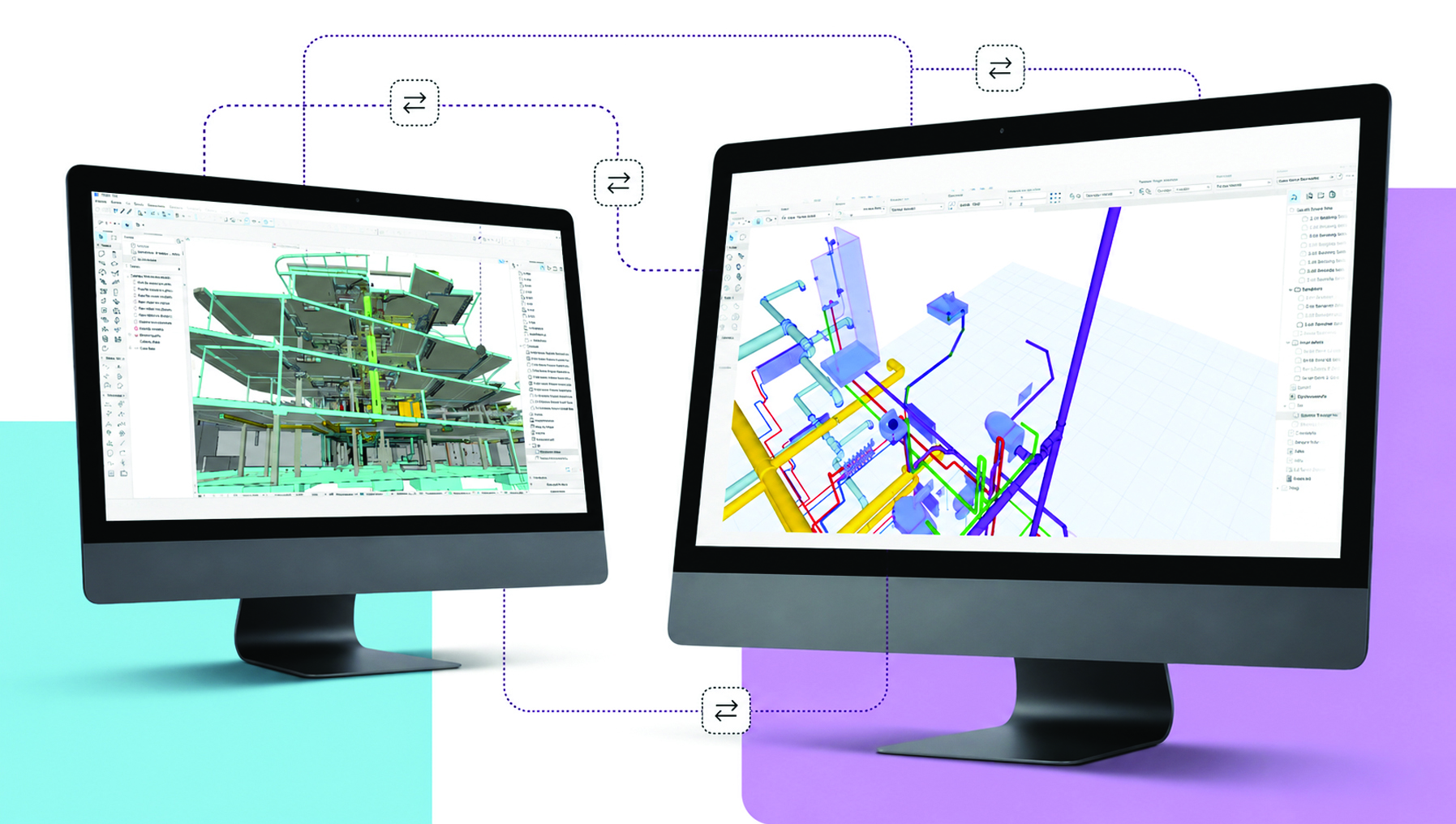
Interoperability enables project data to move seamlessly between different software platforms, while open collaboration enables project stakeholders to work together using that shared information. Together, these concepts support a connected project environment in which models, data, and documents remain synchronized, providing a single source of truth for project stakeholders.
As AEC/O initiatives become increasingly complex, open collaboration helps project teams align early in the design process. And by establishing shared goals and improving communication from the outset, these tools help resolve potential pain points while reducing the friction that often arises when stakeholders have competing priorities and project objectives.
Technology, however, doesn’t replace the hard work of resolving design conflicts, aligning on financial decisions, or alleviating pain points. This work still needs to be accomplished by the project teams, but open collaboration tools provide a shared environment in which to do so. Without the ability to collaborate around real-time project data, teams will experience the same friction points but have fewer ways to resolve them.
Maximizing Collaboration Through Interoperability
The greatest levels of collaboration, however, can only be achieved in interoperable environments where the myriad technologies deployed by project stakeholders work harmoniously. While open collaboration allows for real-time edits and partnership, interoperability enables the retention of information across platforms – whether it be for design, a digital twin, operations, or other necessary platforms.
The problem is that most software developers and technology providers take a “walled garden” approach to product creation. They build an ecosystem where their products work best together – a sales tactic to convince buyers to only invest in that company’s products. But this approach makes it more difficult to exchange data, files, and information between users who operate on different product platforms.

The AEC/O industry is currently facing a shift in which demand from users for interoperable, platform-agnostic technologies is growing. This is an important change, since massive file exchanges degrade quality, whereas data exchanges maintain data within assets.
Plus, at the beginning of projects, project managers work to compile the most effective teams to complete the work. Many AEC/O professionals use software that they are comfortable with, meaning on any given project, experts’ preferences may differ between solution and brand – making interoperability important to facilitate the collaboration that is necessary between stakeholders. Having to limit the talent pool due to a professional’s technology investments can cause the project to face major constraints even before it has begun.
Financial transparency and keeping costs low are also major benefits to data-centric interoperability. Platform-agnostic data exchanges that preserve data quality prevent the hiding or masking of information – financial or otherwise. In data exchanges, the possibility of asset loss is drastically mitigated, maintaining control and clarity; conditions that are required for adherence to a budget.
Interoperability also minimizes room for errors and confusion – peeling away the proprietary infrastructure of the software solution and leaving just the vital data points and maximum clarity across project teams.
Long-Term Impact
Together, I believe open collaboration and interoperability will contribute to eliminating the $2 trillion gap I previously mentioned, building bridges between stakeholders and keeping everyone connected throughout projects.
Efficiencies will be developed, as will the ability to maintain alignment amongst stakeholders with fewer questions of “Which is the latest version?” and “Is this data correct?” This ultimately allows for the establishment of better workflows.
There will also be the capacity for better decision-making, with design conflicts being recognized sooner in the process, and greater access to project data and the latest model with all its information.
Between the development of stronger workflows, efficient project handover, and greater decisiveness, the industry can move its focus toward the goal of building better buildings rather than investing its time, money, and energy into the task of getting on the same page.
The Future of AEC/O Connectivity
Despite the immense benefits of greater connectivity, we cannot expect these technological capabilities to quickly bridge the gaps in the AEC/O industry. Technological adoption across the industry is best compared to turning a big ship: it’s slow. Only 11% of AEC/O firms are fully digital across all project phases, from design through operations, with others still using paper, spreadsheets, and other analog tools to exchange data, insights, and information.
And while more users are beginning to express a desire for interoperable technologies that foster greater levels of collaboration, technology solutions providers are only just coming around to the idea of expanding their product ecosystems to enable interoperability with competitors’ solutions.
For stakeholders that want those features now, it’s important to look for software and technology providers who have interoperability or data exchange agreements with other software providers. Also look for providers that offer “open” platforms or standards, which typically signals their solutions will provide seamless data sharing and collaboration across platforms and stakeholders while still empowering users to maintain full flexibility in defining their own workflows.
We are in the midst of an era of great change, particularly with AI, digital twins, cloud collaboration, VR, and more impacting how AEC/O stakeholders operate. As firms continually look to do more with less, interoperability and open collaboration platforms and technologies provide a pathway forward to improving efficiency while reducing project costs and friction.
About the Author: Miles Smith is a licensed architect and senior industry growth and strategy manager for Graphisoft, a leading global provider of architecture software. He possesses nearly two decades of experience spanning architectural design, building science, and SaaS product adoption, and is a trusted voice in the AEC space, working collaboratively with Graphisoft clients to utilize advanced software solutions to address their unique design needs and move the architecture industry toward a more efficient future.