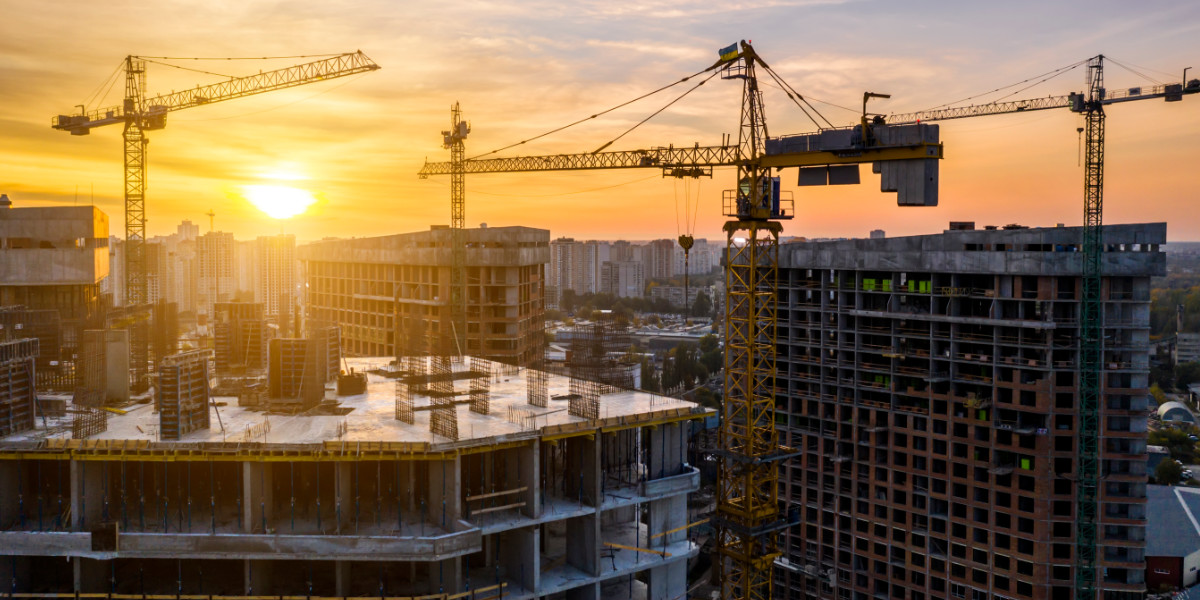
The construction industry entered the year with cautious optimism as several commercial sectors began showing signs of renewed activity. However, much of that early momentum has slowed, leaving contractors, developers, and design professionals facing a market characterized by uncertainty, selective growth, and continuing cost pressures.
Industry indicators suggest that while construction activity remains relatively stable overall, the pace of growth has softened considerably. Many project owners continue to delay major investment decisions as they evaluate economic conditions, interest rates, geopolitical developments, and the potential impact of evolving trade policies.
Commercial construction, in particular, has struggled to gain meaningful traction. Although certain sectors such as data centers, healthcare facilities, and select manufacturing projects continue to generate work, much of the broader commercial market remains subdued. Office construction remains challenged in many regions, while retail development continues to be highly selective. Industrial construction has also begun to moderate after several years of strong expansion.
Adding to the uncertainty are ongoing geopolitical tensions in the Middle East. While the direct effects on construction activity may not always be immediately visible, global conflicts can significantly influence commodity markets, transportation costs, energy prices, and investor confidence. The result is a business environment in which owners and developers often choose caution over expansion.
“Market confidence remains the industry’s biggest challenge,” according to many construction economists. While there is no indication of a severe downturn, there is also little evidence of the broad-based growth necessary to drive a robust expansion cycle.
Public Construction Providing Stability
One bright spot continues to be public construction. Government-funded projects involving transportation infrastructure, utilities, educational facilities, and public improvements remain active in many regions. Federal infrastructure funding and state-level capital improvement programs continue to support construction activity even as private investment slows.
However, public-sector growth appears to be stabilizing rather than accelerating. Current estimates suggest growth rates in the range of 3% to 4%, a level that provides support for contractors but falls short of generating the type of industry-wide expansion that typically accompanies strong private-sector investment.
Historically, the construction industry’s overall health has depended heavily on private-sector spending. New office buildings, industrial facilities, multifamily housing, retail developments, hotels, and privately funded infrastructure projects account for a substantial share of construction volume. When those sectors weaken, public projects alone are rarely sufficient to offset the slowdown.
As a result, many analysts continue to characterize the current environment as a soft market. Until private owners begin increasing capital expenditures and moving projects from planning into construction, growth is expected to remain modest.
Firms Adopt a Defensive Strategy
Many construction firms appear to be adjusting their business strategies accordingly.
Rather than aggressively expanding operations, contractors are increasingly focused on protecting margins, maintaining backlog, and preserving cash flow. Equipment purchases, staffing expansions, and other capital investments are being evaluated more carefully than they were during the rapid growth periods experienced in recent years.
Developers are also taking a more measured approach. Financing costs remain elevated compared with historical norms, and uncertainty surrounding future economic conditions has made project underwriting more challenging. In many cases, projects are continuing through design and entitlement phases but are being delayed before construction begins.
This cautious behavior is becoming evident across much of the construction supply chain. Material suppliers, distributors, subcontractors, and equipment providers are all reporting a more conservative market outlook than they did earlier in the year.
Material Costs Continue Upward Trend
At the same time, construction professionals continue to grapple with rising material costs.
Most broad construction cost indices indicate annual increases of approximately 6%. While this represents a slower pace of escalation than the extraordinary increases experienced during the post-pandemic period, it still places significant pressure on project budgets.
The larger concern lies within the commodity markets. Steel, aluminum, and copper prices have all experienced substantial increases over the past year. Depending on the product category and reporting source, some commodities have recorded year-over-year gains ranging from 20% to 50%.
Steel prices continue to be influenced by global manufacturing demand, transportation costs, energy prices, and international trade policies. Aluminum markets face similar challenges, particularly because of their dependence on international supply chains and energy-intensive production processes.
Copper remains one of the industry’s most closely watched materials. The metal plays a critical role in electrical systems, communications infrastructure, renewable energy projects, electric vehicle charging networks, and the rapidly expanding data center sector. Growing demand from these industries has contributed to significant price increases, creating challenges for electrical contractors and project estimators alike.
For many projects, copper pricing has become a major budgeting concern. Even relatively small changes in copper costs can significantly affect the price of electrical systems, particularly on large commercial and industrial projects.
Tariff Uncertainty Complicates Forecasting
Trade policy remains another significant factor affecting construction costs. The ongoing uncertainty surrounding tariffs has created confusion throughout many construction markets. Manufacturers, suppliers, and contractors continue to monitor potential changes that could affect the cost of imported materials and components.
While pricing reports from major construction cost reporting agencies have become more closely aligned in recent months, meaningful differences remain. Those discrepancies highlight the difficulty of forecasting costs in a rapidly changing market environment.
Estimators increasingly find themselves comparing multiple sources of cost information rather than relying on a single index or pricing service. The need for current, localized, and project-specific cost data has become more important as market conditions grow more volatile.
Energy Costs Add Additional Pressure
Energy markets continue to influence construction costs as well. At the time of publication, crude oil prices were ranging between approximately $95 and $110 per barrel, considerably higher than levels observed a year ago. Because energy costs affect nearly every stage of the construction process, elevated oil prices continue to place upward pressure on project budgets.
Fuel is required to extract raw materials, manufacture products, transport goods, and operate construction equipment. Consequently, increases in energy prices are often reflected throughout the construction supply chain.
Higher transportation costs are particularly important for heavy construction materials such as steel, concrete products, aggregates, and asphalt. As freight costs rise, delivered material prices typically increase as well.
Outlook Remains Cautious
Looking ahead, the industry’s near-term outlook remains mixed. Public construction should continue to provide a stable source of work, while specialized sectors such as data centers, healthcare facilities, and selected manufacturing projects are expected to remain active. However, broader commercial growth will likely depend on improvements in private-sector confidence and investment.
Until private construction spending demonstrates a sustained recovery, many industry observers expect market conditions to remain relatively soft. At the same time, continued volatility in commodity markets, tariff policies, and energy prices suggests that cost escalation will remain an important consideration for contractors and project owners.
For construction professionals, the current environment reinforces the importance of accurate estimating, careful procurement planning, and close monitoring of market conditions. In an industry where margins are often narrow, understanding both demand trends and material cost movements will remain essential for success throughout the remainder of the year.